When Infrastructure Code Stops Reflecting Reality: The Quiet Danger of Configuration Drift

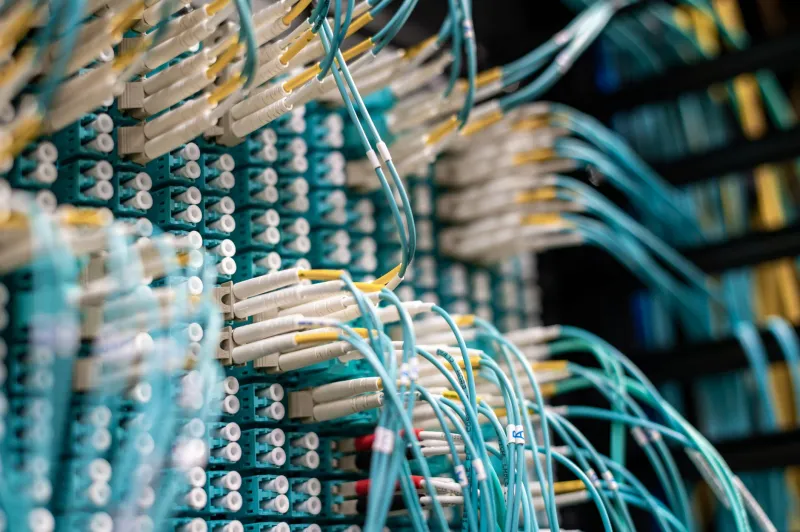
Photo by Photo by Aaron McLean on Unsplash on Unsplash
There is a particular kind of technical debt that does not announce itself. It does not trigger an alert, does not surface in a pull request, and does not appear in any dashboard. It accumulates in the space between what your infrastructure-as-code declares and what your production environment has actually become. Engineers have a name for this phenomenon: configuration drift. And for many organizations, it is the hidden variable behind incidents that should have been preventable.
The premise of infrastructure-as-code — whether expressed through Terraform, Pulumi, AWS CloudFormation, or similar tooling — is deceptively straightforward. You define your desired state in version-controlled files, and your automation enforces that state against real infrastructure. The code becomes the canonical record of what exists. In theory, anyone on the team can read the repository and understand the production environment completely.
In practice, that canonical record starts eroding almost immediately after the first deployment.
How Drift Begins: The Three Usual Suspects
Configuration drift rarely has a single origin. It tends to emerge from a combination of pressures that each seem reasonable in isolation.
Emergency manual changes are the most familiar culprit. An on-call engineer receives a 2 a.m. alert about a failing load balancer rule. The fastest resolution is a direct console change — a security group modification, a revised health check threshold, a firewall rule exception. The incident gets resolved. The post-mortem notes the fix. But the IaC repository never gets updated, because the immediate pressure has passed and the backlog has moved on. That manual change now lives only in the cloud provider's state, invisible to anyone reading the code.
Vendor-initiated updates represent a subtler category. Managed services evolve continuously. A managed database instance might receive an automatic minor version upgrade. A Kubernetes node pool might shift its default admission controller behavior following a provider patch cycle. These changes are applied outside your automation layer entirely, yet they alter the actual behavior of your infrastructure in ways that your declared configuration never anticipated.
Incremental team divergence compounds both of the above. As organizations grow, multiple engineers or teams begin making infrastructure changes through different pathways — some through the IaC pipeline, some through provider-specific CLIs, some through internal tooling that interacts directly with provider APIs. Without strict enforcement at the process level, each pathway introduces the possibility of undocumented state changes. Over months, the gap between the repository and reality widens into something that cannot be closed in an afternoon.
The Cascading Consequences
Drift on its own is a documentation problem. Drift under operational pressure becomes a system reliability problem. And drift with security implications becomes something considerably more serious.
Consider a common scenario: a team provisions a new application environment using their standard IaC templates. During initial testing, a developer opens an inbound port on a security group to debug a connectivity issue, intending to close it before production launch. The port remains open. Six months later, a compliance audit or a penetration test surfaces the exposure. The IaC repository shows the port as closed, because the template was never modified. The drift went undetected because no automated reconciliation was running.
The operational brittleness that drift introduces is equally consequential. When an incident occurs and the team attempts to reproduce or roll back a configuration, they are working from a mental model — or a codebase — that no longer accurately describes the system. Debugging slows. Recovery windows extend. The team discovers discrepancies mid-incident, which is precisely the worst time to be reconciling documentation with reality.
Drift also undermines the reliability of disaster recovery planning. If your IaC represents a diverged state, then a full environment rebuild from code will not produce a system equivalent to what was running before the failure. You may recover, but you will recover to the wrong place.
Detection Strategies That Scale
The most effective approach to configuration drift is not periodic manual audits — those are too infrequent and too labor-intensive to be reliable at scale. The goal is continuous, automated detection that surfaces divergence before it compounds.
Most mature IaC platforms provide mechanisms for drift detection natively or through extension. Terraform's plan command, when run against existing infrastructure rather than as part of an apply workflow, will surface differences between declared configuration and observed state. Running these plan checks on a scheduled basis — rather than only during deployment — converts drift detection from a reactive to a proactive activity. AWS Config, Azure Policy, and Google Cloud's Policy Controller offer analogous capabilities at the cloud-provider level, flagging resources that deviate from defined compliance rules regardless of how those deviations were introduced.
GitOps workflows, particularly in Kubernetes environments, take this further by treating the repository as the continuous enforcement mechanism rather than a one-time deployment source. Tools like Flux and Argo CD reconcile cluster state against repository declarations on a continuous loop, automatically correcting drift or surfacing it for human review depending on configured policy.
For teams operating across heterogeneous infrastructure — a combination of containerized workloads, managed cloud services, on-premises systems, and third-party integrations — a unified configuration management database (CMDB) or infrastructure inventory layer becomes essential. The goal is a system of record that reflects observed reality, updated continuously from live infrastructure rather than from deployment logs alone.
Keeping Code and Reality Aligned Over Time
Detection addresses the symptom. Alignment requires addressing the process behaviors that allow drift to accumulate in the first place.
The most impactful organizational intervention is enforcing infrastructure changes exclusively through the IaC pipeline, even during incidents. This is culturally difficult — it requires that engineers trust the automation pipeline to be fast enough and reliable enough to use under pressure. That trust is earned through investment in pipeline speed, runbook documentation, and break-glass procedures that are themselves codified and reviewed. An emergency change pathway that still routes through version control — even with an expedited review — is far preferable to one that bypasses the system entirely.
Regular reconciliation cycles, even when drift detection is automated, serve a different purpose: they create organizational moments where teams review what has drifted, assess whether the drift represents a legitimate configuration evolution that should be codified, and make deliberate decisions rather than allowing undocumented state to persist indefinitely. Quarterly infrastructure reviews that include a drift report are a practical starting point for teams that do not yet have fully automated enforcement.
Finally, access controls matter. Limiting direct console and CLI access to production environments — restricting it to break-glass scenarios with full audit logging — removes the most common pathway through which manual changes introduce drift. The principle of least privilege, applied to infrastructure modification rather than just data access, is one of the most effective preventive measures available.
The Integrity of the Declared State
Infrastructure-as-code is only as valuable as the accuracy of the state it describes. When that description diverges from production reality, the organization loses more than documentation fidelity — it loses the ability to reason confidently about its own systems. Security posture becomes uncertain. Incident response becomes slower. Recovery becomes unpredictable.
The discipline of keeping code and infrastructure synchronized is not a one-time migration effort. It is an ongoing operational commitment, supported by automation, enforced through process, and sustained by organizational norms that treat the repository as genuinely authoritative. For teams building on modern infrastructure, that commitment is not optional — it is the foundation on which reliable systems are constructed.